
On 23 March 2009 the United Nations Assistance Mission in Afghanistan (UNAMA) had its mandate renewed by UN Security Council resolution 1868. The annual resolution in March every year by the Security Council forms the mandate for the UN Mission in Afghanistan and defines the priorities of the Mission.
The 2009 resolution recognizes the key role played by the UN in coordinating international efforts in Afghanistan and in supporting the upcoming elections. These efforts include supporting the Government to improve governance and the rule of law and fight corruption, as well as facilitating the delivery of humanitarian assistance.

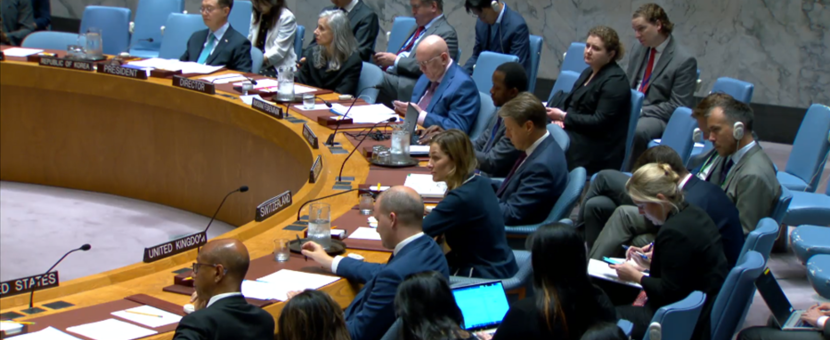
The resolution was unanimously adopted by the 15-member Security Council and extends UNAMA's mandate until 23 March 2010. UN Secretary-General Ban Ki-moon welcomed the renewal of the mandate and particularly the Council's reaffirmation of the UN's "central and impartial role" in promoting peace and stability in Afghanistan. The Council decided that the Mission and the Secretary-General's Special Representative, Kai Eide, will continue to lead civilian efforts in the country.
The Security Council also issues statements on Afghanistan and a delegation of council members visited the country on key fact finding Missions in 2006 and December 2008.
UNAMA’s key role is to promote peace and stability in Afghanistan by leading the efforts of the international community. Together with the Government of Afghanistan the Mission supports the rebuilding of the country and the strengthening of the foundations of peace and a constitutional democracy. The UNAMA mandate from 2008 to 2009 remained defined by the previous resolutions 1662 (2006) and 1746 (2007). The 2008 resolution charged UNAMA and Kai Eide, the Special Representative of the Secretary-General, to lead civilian efforts to:

Strengthen cooperation with the International Security Assistance Force (ISAF);
Provide political outreach through a strengthened and expanded presence throughout the country;
Provide good offices in support of Afghan-led reconciliation programmes;
Support efforts to improve governance and the rule of law and to combat corruption;
Play a central coordinating role to facilitate the delivery of humanitarian aid;
Monitor the human rights situation of civilians and coordinate human rights protection;
Support the electoral process through the Independent Election Commission of Afghanistan;
Support regional cooperation in working for a more stable and prosperous Afghanistan.
On 19 November 1946 Afghanistan was admitted as a member of the United Nations. The UN has a long history in the country, most especially during the years of conflict and since the end of 2001, with many of its major agencies playing a key role in the country’s development and provision of humanitarian assistance.
UN agencies and programmes work with many counterparts, national and international NGOs and partners, and recognize the lead role played by the Government of Afghanistan.
UNAMA is a political Mission directed and supported by the United Nations Department of Peacekeeping Operations. As an ‘integrated’ Mission, UNAMA has two main areas of operation, development and humanitarian issues, and political affairs. The Mission currently has some 1,500 staff, the vast majority of whom (around 80 per cent) are Afghan nationals.
UNAMA coordinates all the activities of the UN system in Afghanistan and works for the establishment of strong and sustainable institutions in the country. The framework for cooperation between the Government of Afghanistan, the United Nations and the international community has been outlined and agreed in a number of key documents and conferences including the Afghanistan Compact of 2006, the Afghanistan National Development Strategy (ANDS) and the Paris Conference of June 2008.
All lay the framework for working towards peace and security, rule of law, good governance, human rights protection and sustainable economic and social development.
Many key benchmarks are also complimented by the UN’s Millennium Development Goals (MDGs).
UNAMA’s priorities include strengthening institutions and building the capacity of the Government at all levels, including the development of institutions of good governance, of law and order, and of security.
KEY DOCUMENTS AND LINKS
Security Council Resolution 1868 extending UNAMA's mandate, March 2009 (Dari - Pashto)
Security Council Resolution 1833 extending ISAF's mandate, September 2008
Bonn Agreement, 2001
Afghanistan Compact, 2006 (Dari - Pashto)
Paris Declaration, 2008 (Dari - Pashto)
Afghanistan National Development Strategy
United Nations Millennium Development Goals
Afghanistan's Millennium Development Goals Report 2005
International Security Assistance Force