The mandate of UNAMA Human Rights under United Nations Security Council Resolution 2096 (2013) is to "monitor the situation of civilians, to coordinate efforts to ensure their protection, to promote accountability, and to assist in the full implementation of the fundamental freedoms and human rights provisions of the Afghan Constitution and international treaties to which Afghanistan is a State party, in particular those regarding the full enjoyment by women of their human rights."
To this end, UNAMA Human Rights monitors, analyzes and reports on the human rights situation in Afghanistan and engages in protection, advocacy and capacity building activities. Through regular public updates (weekly code cables and monthly reports) and thematic reports, UNAMA Human Rights provides stakeholders, including the Government, the Afghan people, the international community, civil society and media with a substantive analysis of the human rights situation, raises issues of concern and proposes and advocates for measures to improve promotion and protection of human rights throughout Afghanistan.
Priority Areas of Work
UNAMA Human Rights is pursuing an overall strategy of “embedding human rights in Afghanistan” or “human rights everywhere all the time for everyone” in support of all Afghan people. The UNAMA Human Rights team implements this strategy through targeted research, reporting, advocacy and engagement in strategic partnerships and dialogue with Government, military, international and civil society actors, and communities across Afghanistan in four priority areas: protection of civilians, violence against women, peace and reconciliation and detention.
Protection of Civilians: UNAMA Human Rights undertakes a range of activities aimed at minimizing the impact of the armed conflict on civilians; this includes independent and impartial monitoring, documentation and reporting of incidents involving loss of life or injury to civilians; advocacy activities to strengthen protection of civilians affected by the armed conflict; and initiatives to promote respect for international humanitarian and human rights law, and the Afghan Constitution among all parties to the conflict. UNAMA Human Rights systematically documents and releases statements and public reports on protection of civilians and civilian casualties. (Click here for UNAMA reports on the Protection of Civilians in Armed Conflict.)
In addition, UNAMA Human Rights is participating with other parts of UNAMA and external stakeholders in actively observing the current Afghan government-led and NATO/ISAF process of “Transition” (transfer of lead security responsibilities from international military forces to Afghan security forces). UNAMA Human Rights’ focus is on ensuring that “Transition” does not result in a reduction of protection for civilians, encompasses the broader human security agenda and fully protects women’s rights.
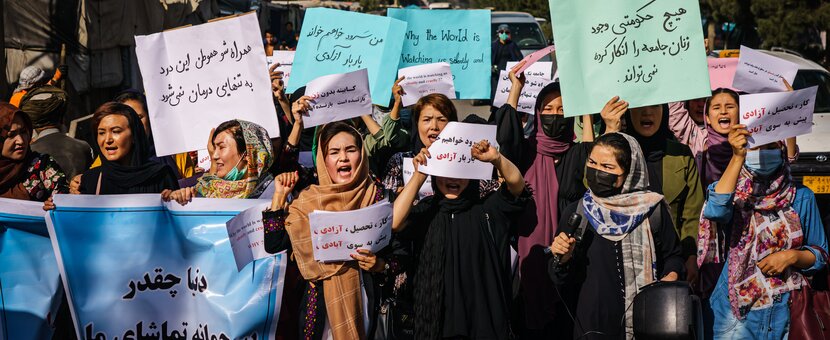
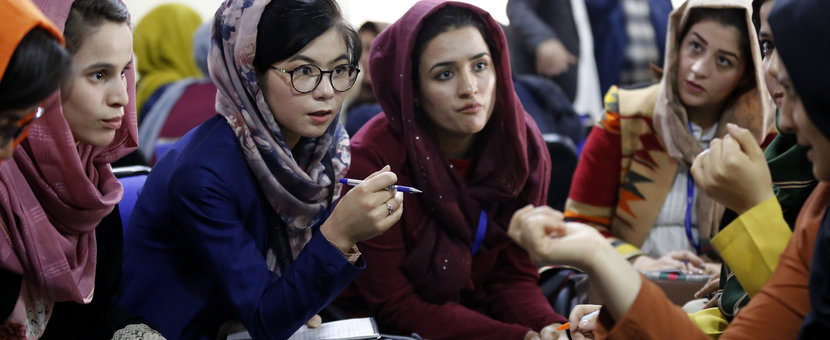
Violence against Women: UNAMA Human Rights’ focus is on combating violence against women and enabling their participation in the public sphere. On 11 December 2012, UNAMA Human Rights released its latest public report documenting harmful traditional practices against women and girls and implementation of the Elimination of Violence against Law (EVAW law) by the Afghan government. The report, based on extensive country-wide research, found that despite some progress in implementing the EVAW law designed to protect Afghan women from violence, application of the landmark law continued to be hampered by “dramatic under reporting” and lack of investigations into most incidents of violence targeting women. The report recommends measures to end such practices. UNAMA Human Rights is engaged in intensive advocacy on the report’s findings and recommendations, monitoring and reporting on implementation of the EVAW law and is supporting provincial departments’ of women’s affairs and women’s NGOs throughout the country. (Click here for all UNAMA reports on violence against women)
UNAMA Human Rights also provides technical support to legislative developments (for example the draft law on traditional dispute resolution and regulation on women’s shelters) that affect women and girl’s rights. Human Rights works with Afghan partners to promote and guarantee women’s representation in Government, elections and peace, reconciliation and reintegration processes.
Peace and Reconciliation (Transitional Justice and Impunity): UNAMA Human Rights supports initiatives to mobilize and strengthen women’s and civil society organizations, victims’ groups, the media, Government and the international community to pursue processes aimed at ending impunity. UNAMA HR works with Afghan civil society to strengthen their effective participation in major political dialogues and in the current peace, reconciliation and reintegration process (Afghanistan Peace and Reintegration Program-APRP).
Together with other parts of UNAMA, Human Rights provides technical assistance to the APRP, the High Peace Council and other relevant actors. Human Rights aims to integrate human rights in the peace and reconciliation process through promoting the meaningful inclusion of civil society, women’s and victims’ groups in the peace and reintegration process (through facilitation of the Afghan People’s Dialogue on Peace) and through ensuring that issues of justice, accountability (particularly for serious human rights crimes), grievance resolution, vetting and amnesty are addressed in line with Afghan law and the Government’s obligations under international human rights and humanitarian law.
Detention: UNAMA Human Rights documents and advocates on conflict and non-conflict related detention issues involving Afghan authorities and international military forces. Human Rights is advocating for implementation of recommendations to end widespread arbitrary detention documented in UNAMA's major reports on arbitrary detention. UNAMA Human Rights unit is also monitoring detention in National Directorate of Security (NDS) and Ministry of Justice detention facilities throughout the country and is using findings in advocacy, focusing on treatment and due process rights of detainees. (Click here for the latest UNAMA report on treatment of conflict-related detainees in Afghan custody.)
Partnering with National Institutions and Civil Society
UNAMA Human Rights works with the following actors to support national institution building and capacity development:
AIHRC (Afghanistan Independent Human Rights Commission): UNAMA HR collaborates with the AIHRC on protection of civilians, violence against women, detention and impunity. UNAMA HR also supports the AIHRC in developing and implementing the National Priority Program for Human Rights and Civic Responsibility as part of Kabul Process.
Ministry of Justice: UNAMA HR provides technical support to the Human Rights Support Unit of the Ministry of Justice, which is working to facilitate comprehensive understanding and mainstreaming of human rights across ministries of the Afghan government.
Judicial and Law Enforcement Actors including Ministry of Justice, Ministry of Interior, Supreme Court and National Directorate of Security: UNAMA HR has worked with Afghan judicial and law enforcement actors since 2006 to address arbitrary detention, treatment of detainees/prisoners, violence against women and a range of rule of law concerns.
Ministry of Foreign Affairs: UNAMA HR supports the Ministry of Foreign Affairs on its submissions under the Universal Periodic Review, and the Government in designing an action plan for implementation of UPR recommendations issued by the UN Human Rights Council. UNAMA HR provides technical support to Government committees that oversee drafting of country reports required under Afghanistan’s international treaty body reporting obligations.
Civil Society: UNAMA Human Rights supports and carries out joint activities with civil society organizations throughout Afghanistan and in Kabul. HR also closely monitors the situation of Afghan human rights defenders and takes appropriate action to assist and support them as necessary.
Secretary-General's latest report
The UN Secretary-General's quarterly report to the Security Council released on 5 March 2013 provides an update of UNAMA human right activities since 6 December 2012, listed below. For a full copy of the report, click here.
III. Human rights
25. On 9 December, UNAMA released a report entitled “Still a long way to go: implementation of the Law on Elimination of Violence against Women in Afghanistan”, which was based on information gathered from 22 provinces from October 2011 to September 2012. It found progress and gaps in implementation. Although prosecutors and courts had turned to the legislation in an increasing number of cases, overall application remained low. In 16 provinces, police and prosecutors had received 479 reports of violence against women, of which 163 had resulted in an indictment and 72 had used the legislation within the indictment. There had been convictions in 52 cases (72 per cent), compared with 34 per cent a year earlier.
26. Protection of women’s rights activists remained a matter of grave concern. On 9 December, the Acting Director of the Department of Women Affairs in Laghman Province was killed in a targeted attack, the second killing of the incumbent in five months. On 15 January, the United Nations Population Fund, the United Nations Entity for Gender Equality and the Empowerment of Women and the World Health Organization (WHO) signed a memorandum of understanding to develop a referral system to support the treatment and care of victims of gender-based violence. The first programme of its kind in Afghanistan, planned activities include a study in six provinces on appropriate case management and treatment protocol, training for health personnel in all 34 provinces by the end of 2014 and one-stop assistance, to be piloted in hospitals in Kabul, Bamyan and Nangarhar Provinces.
27. On 20 January, UNAMA released a report entitled “Treatment of conflict-related detainees in Afghan custody: one year on”. Based on interviews with 635 conflict-related detainees in 89 Afghan facilities covering 30 provinces, torture was found to persist in numerous detention facilities, efforts by the Government and international partners, in particular ISAF, notwithstanding. More than half of the conflict-related detainees interviewed had experienced ill-treatment and torture, notably in 34 facilities controlled by the police and the National Directorate of Security. On 22 January, the President established a fact-finding delegation to investigate concerns raised. On 11 February, the delegation announced that it had found the existence of torture and ill-treatment of detainees at the time of arrest and investigation by police and national security officials in almost 48 per cent of detainees interviewed, while two thirds had had no access to a defence lawyer. On 16 February, the President issued a decree for the implementation of the delegation’s 11 recommendations pertaining to the prevention of torture and ill-treatment in detention centres.
28. On 19 February, UNAMA released its 2012 annual report on the protection of civilians in armed conflict. The report documented 2,754 civilian deaths and 4,805 civilian injuries in 2012, a 4 per cent decrease in civilian casualties as compared with 2011 — the first such reduction in six years. The figure included a 12 per cent decline in the number of civilians killed. Anti-Government elements bore responsibility for 2,179 civilian deaths and 3,952 injuries, a 9 per cent increase compared with 2011. Pro-Government forces were responsible for 316 deaths and 271 injuries, a 46 per cent drop compared with 2011. Overall, 81 per cent of casualties were attributed to anti-Government elements, 8 per cent to pro-Government forces and 11 per cent were unattributed. The number of women and girls killed and injured increased by 20 per cent in 2012, with 864 casualties (301 deaths and 563 injuries). Other trends affecting civilian protection included increased targeting of civilian locations by anti-Government forces and an apparent proliferation of illegal armed groups, including pro-Government militias, in particular in the north and north-east of the country.
29. From 1 November to 31 January, UNAMA documented 472 civilian deaths and 1,063 civilian injuries, a decrease of 7 per cent in civilian casualties compared with the same quarter a year earlier. This total included a 17 per cent decrease in deaths and no change in injuries. Anti-Government elements were responsible for 81 per cent, and pro-Government forces for 7 per cent, of the civilians killed and wounded. The remaining 12 per cent of civilian casualties could not be attributed to any party; they primarily stemmed from crossfire incidents during ground engagements, cross-border shelling or from explosive remnants of war.
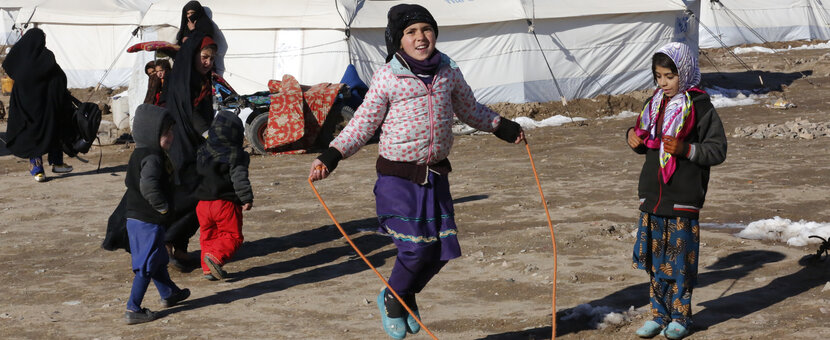
30. The United Nations-led country task force on monitoring and reporting on children and armed conflict received 166 reports of incidents involving grave child rights violations from 1 November to 31 January. A total of 79 deaths and 192 injuries to children were verified. Most were in the southern and eastern regions. The Ministry of Foreign Affairs expressed strong support for implementation of the action plan for the prevention of underage recruitment and its annexes on killing and maiming and sexual violence against children, including a commitment to convene the Inter-ministerial Steering Committee and Technical Working Group on Children And Armed Conflict.
31. The second phase of the Afghan People’s Dialogue on Peace, an initiative led by civil society and supported by UNAMA, was launched on 13 February. It aims to elicit the views of diverse citizens on perceptions of local drivers of conflict and identify possible local catalysts for durable peace. More than 200 focus group discussions with almost 4,000 Afghans from all 34 provinces are anticipated to be held over the coming 10 months.
KEY LINKS
UNAMA reports on the protection of civilians in armed conflict
UNAMA reports on women's rights
Office of the High Commissioner for Human Rights - Afghanistan pages
Afghanistan Independent Human Rights Commission
Office of the Special Representative of the Secretary-General for Children and Armed Conflict